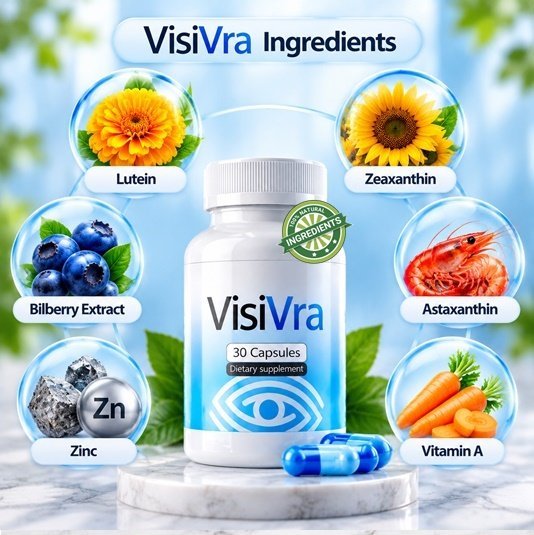
The 6-bottle bundle works out at $49 a bottle; every bundle carries a 60-day refund window that starts on your purchase date.
See Visivra OfferPaid linkQuick profile
| Profile | |
|---|---|
| Source | Fruit of Vaccinium myrtillus (European blueberry relative) |
| Active compounds | Anthocyanins |
| Claimed role | Night vision, eye circulation, antioxidant |
| Studied amount | Extracts up to 160 mg/day, up to 6 months |
| Visivra dose | Not published |
| Safety flag | Pregnancy data lacking; leaves unsafe in high doses |
| Grade | D — weak |
What bilberry is
Bilberry is a small, dark-blue berry that grows wild in Northern Europe. Unlike cultivated blueberries, it’s dark all the way through, thanks to high levels of anthocyanins — purple-blue antioxidant pigments. Supplements use dried fruit or concentrated extracts, often standardised to a stated anthocyanin percentage.
The story behind its reputation
Bilberry’s fame comes largely from a popular story about pilots eating bilberry jam before night missions to see better in the dark. The tale spread far and wide, and bilberry became a fixture in eye supplements. When researchers tested it properly, the results didn’t match the legend.
The seller offers 2-, 3- and 6-bottle bundles. If you take prescription medicine, show the label to your pharmacist first.
See Visivra OfferPaid linkProposed mechanisms
In laboratory and animal work, anthocyanins:
- neutralise free radicals;
- may strengthen small blood vessels;
- may influence the regeneration of rhodopsin, the dim-light pigment.
These effects are plausible but haven’t translated into clear benefits in human eyes.
Evidence check
NCCIH, the US government’s centre for complementary health research, summarises:
- bilberry has not been clearly shown to help any health condition;
- night-vision studies conflict, and the most rigorous ones found no benefit in healthy people;
- traditional use for high blood sugar lacks evidence of effectiveness.
Some small studies of combination products mention eye fatigue or dryness, but they’re too small and mixed to rely on.
Amount: research vs Visivra
| Source | Bilberry extract |
|---|---|
| Amounts studied (NCCIH) | Up to 160 mg/day, up to 6 months |
| Visivra per serving | Not disclosed; part of the 351 mg proprietary blend |
Safety and who should be careful
- Bilberry fruit is safe in normal food amounts.
- Extracts up to 160 mg/day for six months appeared well tolerated.
- Bilberry leaves may be unsafe at high doses or with long-term use — check your product uses fruit.
- Little is known about safety in pregnancy and breastfeeding at supplement doses.
- If you take any medicine, NCCIH advises checking with your provider first. People on blood thinners or diabetes medication often ask about bilberry; we found no specific warning in the government sources we checked, so ask your pharmacist.
Why it’s in Visivra
Bilberry adds antioxidant pigments and a familiar “eye” ingredient that many shoppers expect. At studied amounts it’s unlikely to do harm. It’s also unlikely to be the part of the formula that makes a difference.
Bilberry in your diet instead
If you like the idea of anthocyanins, food is an easy route: bilberries, blueberries, blackberries, blackcurrants, red cabbage and purple grapes all contain them. They come with fibre and other nutrients, and NCCIH considers bilberry fruit safe in normal food amounts. A handful of berries won’t fix your night vision either — but it’s a pleasant part of an eye-healthy diet.
How to read a bilberry label
Bilberry products vary enormously. Look for: the plant part (fruit, not leaf), whether it’s an extract or whole-fruit powder, the amount in milligrams, and the standardisation — often given as a percentage of anthocyanins. Without those details, two products both labelled “bilberry” can contain very different amounts of the active pigments.
Bottom line for shoppers
If bilberry is the reason you’re drawn to a product, reconsider. The ingredient with the strongest evidence in Visivra is lutein, not bilberry.
Verdict
Grade D. A traditional favourite with weak modern evidence. Harmless for most adults at studied amounts, but not a reason to choose Visivra.*
Orders go through the seller’s BuyGoods checkout. Check the final total and screenshot it before you confirm.
See Visivra OfferPaid linkCommon questions
Does bilberry help night vision?
The most rigorous studies found no night-vision benefit in healthy people, according to NCCIH.
Bilberry vs blueberry?
Close relatives; bilberries are smaller, darker throughout and richer in anthocyanins.
Is bilberry safe to take?
Fruit extracts up to 160 mg/day for six months appeared well tolerated. Pregnancy safety isn’t well known.
Can I take bilberry with my medication?
Check with your doctor or pharmacist; NCCIH advises this for any medicine.
Why include bilberry if evidence is weak?
It’s a traditional eye ingredient that adds antioxidants; it’s not the formula’s strongest component.
Sources
Each reference was opened and read when this page was last updated (October 18, 2026).
*The Food and Drug Administration has not evaluated these statements. Visivra is not intended to diagnose, treat, cure, or prevent any disease. We publish general information, not personal medical advice: please check with your doctor, pharmacist or eye-care professional before starting a supplement — particularly during pregnancy or breastfeeding, alongside medication, or with an existing eye condition.