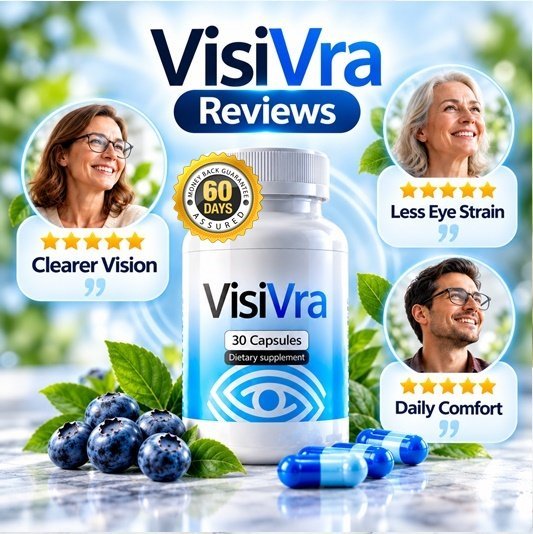
- Review summary
- How we approached this review
- Claim 1: ‘Supports clearer vision’
- Claim 2: ‘Protects aging eyes’
- Claim 3: ‘Relieves screen strain’
- Claim 4: ‘Night vision and antioxidant defence’
- Reader feedback
- How to read other Visivra reviews
- Cost and value
- Strengths and drawbacks
- Who should buy, who should pass
- What the seller’s documents say — and don’t
- How Visivra compares with a typical pharmacy eye supplement
- Our testing checklist if you decide to try it
- Questions we’d put to the seller
- Delivery and customer service notes
- Who we think gets the most from Visivra
- Final verdict
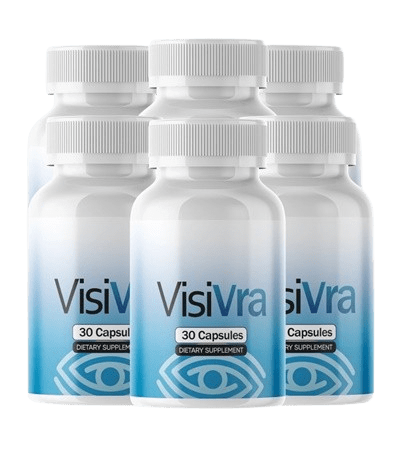
The 6-bottle bundle works out at $49 a bottle; every bundle carries a 60-day refund window that starts on your purchase date.
See Visivra OfferPaid linkReview summary
| Criterion | Rating | Why |
|---|---|---|
| Ingredient selection | Good | Leads with lutein and zeaxanthin |
| Dose transparency | Poor | Amounts not listed before purchase |
| Product-level evidence | None | No trial on Visivra itself |
| Cost | Fair | $49–$59/bottle on larger bundles |
| Refund terms | Fair | 60 days, but return postage is yours |
| Ease of buying | Mixed | Several sites pose as “official” |
We use words, not stars, because a star score would suggest a precision our evidence doesn’t support.
How we approached this review
We started with three primary documents: the seller’s sales page, its returns policy and its terms of service (all checked on October 18, 2026). From those we listed every factual claim — ingredients, prices, shipping, refund conditions — and every health claim.
Each health claim was then checked against independent sources: the National Eye Institute’s AREDS studies, NIH Office of Dietary Supplements fact sheets, NCCIH, the Linus Pauling Institute, the European Food Safety Authority, and a peer-reviewed astaxanthin trial. You’ll find every link at the bottom of the page.
Things we could not confirm: the amount of each ingredient, the manufacturer’s identity and factory, and any independent lab test of current batches.
Claim 1: ‘Supports clearer vision’
Verdict: partly supported, depending on dose.
Lutein and zeaxanthin raise macular pigment. A meta-analysis of eight trials summarised by the Linus Pauling Institute reported better visual acuity and contrast sensitivity with lutein and/or zeaxanthin, at 6–20 mg/day of lutein. If Visivra’s capsule contains amounts in that range, this claim is reasonable. If it contains far less, it isn’t. “Clearer vision” also can’t mean correcting short- or long-sightedness — that’s optics, not nutrition.
The seller offers 2-, 3- and 6-bottle bundles. If you take prescription medicine, show the label to your pharmacist first.
See Visivra OfferPaid linkClaim 2: ‘Protects aging eyes’
Verdict: supported only for a specific group, at specific doses.
In AREDS2, a formula of vitamins C and E, zinc, copper, lutein and zeaxanthin cut the risk of intermediate AMD progressing to advanced AMD by about a quarter. It did not stop AMD from starting, didn’t help early AMD, and didn’t affect cataracts. Visivra shares three of those nutrients but is not the AREDS2 formula.
Claim 3: ‘Relieves screen strain’
Verdict: early and limited evidence.
The best data come from a 2023 trial (Sekikawa et al.) in 60 screen workers given 9 mg/day astaxanthin or placebo for six weeks. Participants aged 40+ kept better visual acuity after screen work; younger participants saw no difference, and other measures didn’t change. The astaxanthin supplier funded the study. Meanwhile, the American Academy of Ophthalmology points out that we blink far less at screens — 5 to 7 times a minute instead of about 15 — which simple habits can fix.
Claim 4: ‘Night vision and antioxidant defence’
Verdict: weak, except where there’s a deficiency.
Vitamin A deficiency causes night blindness, so correcting it clearly helps. Extra vitamin A doesn’t sharpen vision in people who already get enough. Bilberry — the classic “night vision” herb — fared poorly: NCCIH says the most rigorous studies found no night-vision benefit. Antioxidant claims rest mostly on lab work.
Reader feedback
“After long hours at my computer, my eyes often felt tired and my vision blurry. Since trying Visivra, I’ve noticed less eye fatigue during work. Finishing a report without frequent breaks felt great!”
Anna G. – Florida, USA
“I started Visivra after becoming concerned about age-related vision changes. After two months, evening walks seemed easier, and I felt more confident. It’s been an encouraging experience!”
James T. – Illinois, USA
“I was skeptical at first, but after about a month of using Visivra, I found it easier to read small print on product labels. My daughter even noticed I wasn’t squinting as much!”
Karen M. – California, USA
Space reserved for genuine reader feedback, shared with permission. We never write testimonials or star ratings ourselves.
Have you used Visivra? Tell us — good or bad. We publish only with consent.
How to read other Visivra reviews
When you research further, these patterns are worth noticing:
- Wall-to-wall five-star ratings with no criticism at all.
- The same testimonial (same name, same photo) on different websites.
- “Restores perfect vision” or “reverses” disease — no nutrient can do that.
- “FDA approved” — the FDA doesn’t approve supplements before they’re sold.
- Countdown timers and “only 3 left” banners designed to rush you.
Trustworthy reviews mention limits, give a timeframe and don’t hide the price.
Cost and value
Try It
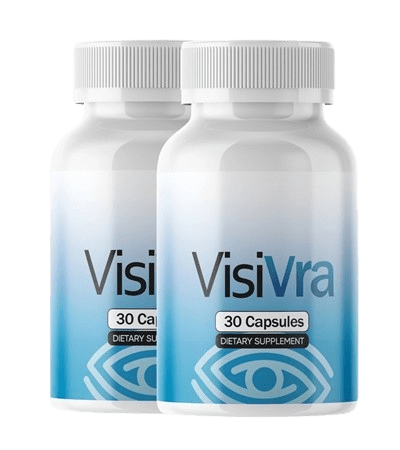
- Total $158
- About $2.63 per day
- Shipping charged at checkout
- 60-day refund window
Six-Month Supply
- Total $294
- About $1.63 per day
- US shipping included
- 60-day refund window
- Cheapest per day
Three-Month Supply
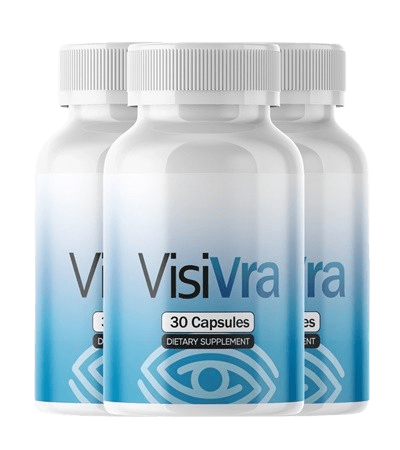
- Total $177
- About $1.97 per day
- US shipping included
- 60-day refund window
Prices as listed on the seller’s checkout page on October 18, 2026. Prices can change — always confirm the total at checkout. Buttons are paid links.
Value hinges on dose. A capsule with 10 mg lutein and one with 1 mg can look identical on a sales page. Before you buy, it’s reasonable to ask the seller’s support line (+1 323-347-4522) for the Supplement Facts panel.
Strengths and drawbacks
Strengths
- Built around lutein and zeaxanthin — the best-researched eye carotenoids
- Only six actives, so it is easy to check against other products you take
- A written 60-day refund policy on the seller’s site
- Delivery included on the 3- and 6-bottle bundles (US)
- We found no subscription or autoship terms
Drawbacks
- No amounts per ingredient on the sales page
- The finished product has not been tested in a published trial
- Refunds require every bottle back and you pay the postage
- Several look-alike ‘official’ sites make buying confusing
- Cannot correct eyesight or treat eye disease
Who should buy, who should pass
| Your situation | Our suggestion |
|---|---|
| Healthy, screen-heavy job, few vegetables | Reasonable to try alongside screen breaks — after checking the label |
| You eat greens and eggs most days | Probably little to gain |
| Intermediate AMD | Ask your eye doctor about an AREDS2 product with stated doses |
| Pregnant, breastfeeding or on prescriptions | Speak to your doctor before any eye supplement |
| Smoker or ex-smoker | Confirm the vitamin A form first |
| You want proof before paying | Request the label and batch certificate from the seller |
What the seller’s documents say — and don’t
Reading the sales page, returns policy and terms side by side is revealing.
What they confirm: the six ingredient names; the three bundles and their prices; included US delivery on 3 and 6 bottles; a 60-day refund counted from purchase; that every bottle must be returned with the packing slip; that the customer pays return postage; refunds to the original payment method in roughly 5–10 business days; a support phone number and a returns address at SHIPOFFERS in Colorado.
What they leave out: the amount of each ingredient; the capsule count and daily serving; the form of vitamin A and zinc; the manufacturer and where it’s made; any third-party testing; any clinical study on the product. The terms also mention a company name, “Vigorus”, without explaining its role.
For a supplement that asks you to commit up to $294, those omissions matter more than any single health claim.
How Visivra compares with a typical pharmacy eye supplement
| Feature | Visivra | Typical pharmacy eye formula |
|---|---|---|
| Doses on the box | Not on sales page | Usually printed clearly |
| Lutein + zeaxanthin | Listed | Usually included |
| Astaxanthin, bilberry | Included | Sometimes |
| Vitamins C, E, copper | Not listed | Often (AREDS2-type) |
| Where sold | Online only | Pharmacies and online |
| Refund | 60 days from purchase | Varies by retailer |
Visivra’s distinguishing features are its extras (astaxanthin and bilberry) and its online-only bundle model. Its main disadvantage is transparency. Full comparison: Visivra alternatives.
Our testing checklist if you decide to try it
Because no trial exists for Visivra itself, the most useful evidence you’ll get is your own — collected carefully:
- Week 0: note screen hours, end-of-day eye comfort (0–10), dryness (0–10) and any headaches.
- Daily: take Visivra with the same meal; keep screen breaks steady.
- Weekly: re-score at the same time of day.
- Day 45: compare with week 0. A change of a point or two may be noise; a clear, sustained shift is more meaningful.
- Anything new or worse: stop and see an eye doctor.
This won’t make your experience a clinical trial, but it’ll make your keep-or-return decision far better informed.
Questions we’d put to the seller
If you contact Visivra’s support team before ordering, these are the questions worth asking:
- How many milligrams of lutein, zeaxanthin, astaxanthin, bilberry extract and zinc are in one serving?
- Is the vitamin A retinyl palmitate, retinyl acetate or beta-carotene — and how many micrograms?
- Who manufactures Visivra, and in which country?
- Can you share a recent third-party certificate of analysis for the batch you’ll send?
- Is “Vigorus” the brand owner?
Clear, prompt answers would be a good sign. Vague ones are worth noting too.
Delivery and customer service notes
When we checked, delivery was included for US addresses on the 3- and 6-bottle bundles and charged at checkout on the 2-bottle bundle. The seller publishes a phone line for order status (+1 323-347-4522) and a contact form; the returns page itself didn’t list an email or opening hours. We haven’t placed a test order, so we can’t comment on delivery speed or response times — reader reports are welcome.
Who we think gets the most from Visivra
Putting the evidence together, the reader most likely to benefit is an adult over 40 who spends long days on screens, eats few leafy greens or eggs, has healthy eyes on a recent exam, takes no interacting medicines, and confirms from the label that the lutein dose is meaningful. For almost everyone else, diet, screen habits and the right glasses deliver more for less money.
Final verdict
Visivra picks the right ingredients and the refund policy is clear and consistent across the seller’s documents. What it lacks is openness about doses and any product-level testing, and its marketing ecosystem — several “official” sites, “FDA approved” headings elsewhere — doesn’t help its credibility.
If you try it, do it methodically: note your baseline symptoms, take it as directed with food, keep every bottle, and decide by about day 45.
Covered for 60 days from the day you pay. The seller’s returns policy asks you to send back every bottle — opened, unopened or empty — together with the packing slip, to SHIPOFFERS, 19655 E 35th Dr #100, Aurora, CO 80011. You cover the return postage. Once the parcel is processed, the money goes back to your original payment method, typically within 5–10 business days. Walkthrough: how to return Visivra.
Orders go through the seller’s BuyGoods checkout. Check the final total and screenshot it before you confirm.
See Visivra OfferPaid linkCommon questions
Is Visivra worth buying?
It may be worth trying for a healthy adult with a low intake of leafy greens, if the label shows meaningful lutein and zeaxanthin doses. People with eye disease should follow their eye doctor’s advice instead.
Has Visivra been clinically tested?
Not as a finished product, as far as we could find. Its individual ingredients have been studied.
What do critical reviews say?
The main criticisms are undisclosed doses, multiple ‘official’ websites, misleading ‘FDA approved’ wording on some pages and paying your own return postage.
How quickly does Visivra work?
Nutrients that build up in the eye work over weeks to months. Most relevant studies lasted six weeks or longer.
Can I trust five-star Visivra reviews?
Be cautious. Look for reviews that mention downsides and timeframes, and be wary of identical testimonials across sites.
Is Visivra safe with other supplements?
Check for overlapping zinc and vitamin A, which have upper limits. Ask a pharmacist if unsure.
Sources
- National Eye Institute — Age-Related Eye Disease Studies (AREDS/AREDS2): major findings
- Linus Pauling Institute, Oregon State University — Carotenoids
- Sekikawa T. et al. Effects of diet containing astaxanthin on visual function in healthy individuals: a randomized, double-blind, placebo-controlled, parallel study. J Clin Biochem Nutr. 2023;72(1):74–81
- American Academy of Ophthalmology — Computers, Digital Devices, and Eye Strain
- NCCIH — Bilberry: Usefulness and Safety
- NIH Office of Dietary Supplements — Vitamin A and Carotenoids: Health Professional Fact Sheet
- U.S. Food and Drug Administration — Dietary Supplements
- MalwareTips — VisiVra Review: FDA Claims, Ingredient Gaps and Package Prices Investigated
- Visivra sales page (seller)
- Visivra returns policy (seller)
- Visivra terms of service (seller)
Each reference was opened and read when this page was last updated (October 18, 2026).
*The Food and Drug Administration has not evaluated these statements. Visivra is not intended to diagnose, treat, cure, or prevent any disease. We publish general information, not personal medical advice: please check with your doctor, pharmacist or eye-care professional before starting a supplement — particularly during pregnancy or breastfeeding, alongside medication, or with an existing eye condition.