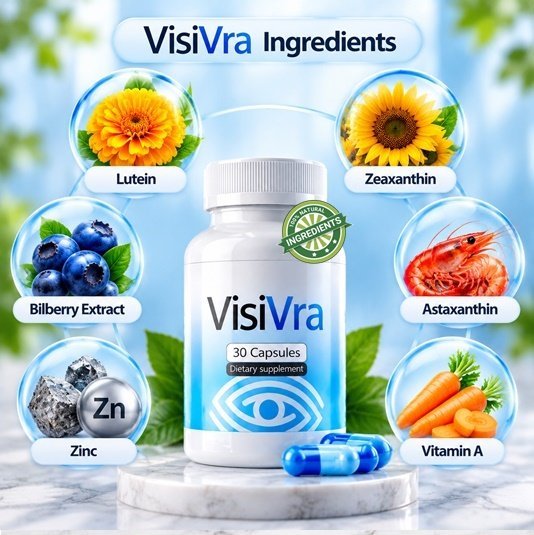
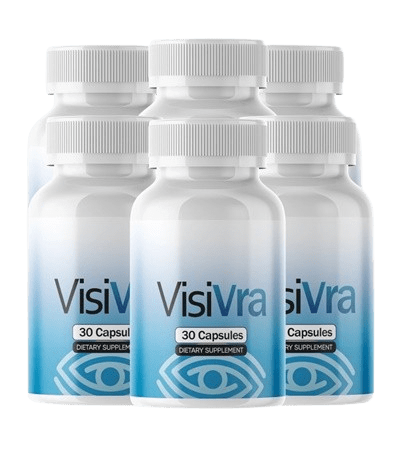
The 6-bottle bundle works out at $49 a bottle; every bundle carries a 60-day refund window that starts on your purchase date.
See Visivra OfferPaid linkQuick profile
| Profile | |
|---|---|
| Family | Xanthophyll carotenoid |
| Stored in | Fovea (centre of the macula); lens |
| Job | Blue-light filter; antioxidant |
| Research doses | 2 mg/day in AREDS2; 0–10 mg/day in trials |
| Visivra dose | Not published |
| Top foods | Yellow corn, orange peppers, egg yolk, goji |
| Grade | A — with lutein |
A close cousin of lutein
Zeaxanthin and lutein are almost identical molecules — they differ only in where one double bond sits. The body treats them differently, though. Lutein spreads across the macula, while zeaxanthin (and meso-zeaxanthin, which the body makes from lutein) concentrates in the fovea, the tiny central pit that delivers your finest detail vision.
What it does
Like lutein, zeaxanthin absorbs blue light and neutralises reactive oxygen species. Because it sits at the fovea, it’s thought to protect the cones responsible for reading and recognising faces. The Linus Pauling Institute notes the combined macular pigment can absorb up to 90% of blue light, depending on density.
The seller offers 2-, 3- and 6-bottle bundles. If you take prescription medicine, show the label to your pharmacist first.
See Visivra OfferPaid linkEvidence check
Zeaxanthin is nearly always studied alongside lutein, so its separate contribution is hard to isolate.
- AREDS2: 2 mg zeaxanthin + 10 mg lutein (with other nutrients) reduced progression from intermediate to advanced AMD by about 25%. AREDS2 used them to replace beta-carotene (NEI).
- Meta-analysis: trials with 0–10 mg/day zeaxanthin (plus lutein) showed improved visual acuity and contrast sensitivity.
- Diet gap: spinach and kale are rich in lutein but relatively poor in zeaxanthin, so greens-heavy diets may still be low in it.
Research dose vs Visivra
| Source | Zeaxanthin |
|---|---|
| AREDS2 formula | 2 mg/day |
| Trial range | 0–10 mg/day |
| Visivra per serving | Not disclosed; part of the 351 mg proprietary blend |
Most eye formulas follow the AREDS2 ratio of about 5 parts lutein to 1 part zeaxanthin.
Food sources
Yellow corn and cornmeal, orange and yellow bell peppers, egg yolks, goji berries, and smaller amounts in persimmon and orange squash. A little fat in the meal helps absorption.
Why pairing matters
Because the body converts some lutein to meso-zeaxanthin but can’t make zeaxanthin itself, a formula with both covers the full macular pigment trio more closely. A lutein-only supplement relies on your diet for zeaxanthin. Visivra lists both — a point in its favour.
Safety
Zeaxanthin was taken daily for years in AREDS2 without notable safety concerns. As with any carotenoid, very high intake may tint the skin. Pregnant or breastfeeding women and people with medical conditions should check supplements with their doctor.
Meso-zeaxanthin: the third pigment
The macular pigment actually has three components: lutein, zeaxanthin and meso-zeaxanthin. The body makes meso-zeaxanthin from lutein inside the retina, and it concentrates at the very centre alongside zeaxanthin. Some supplements add meso-zeaxanthin directly; Visivra doesn’t list it. Because the body can produce it from lutein, a formula with adequate lutein still supports all three.
How zeaxanthin is absorbed
Like other carotenoids, zeaxanthin is fat-soluble. It’s absorbed with dietary fat, packaged into lipoproteins in the blood and delivered to tissues including the retina. That’s why taking a zeaxanthin-containing supplement with a meal — and why egg yolks, with their natural fat, are such a well-absorbed source — makes a practical difference. Levels in the eye build gradually over weeks to months of regular intake.
Zeaxanthin at a glance for shoppers
When you compare eye supplements, check three things about zeaxanthin: that it’s listed at all (some products contain lutein only), the amount in milligrams (2 mg matches AREDS2), and whether the lutein-to-zeaxanthin ratio is roughly 5:1, as in the trial. Visivra lists zeaxanthin; its amount is the missing piece.
Verdict
Grade A (as a lutein partner). A logical, evidence-aligned addition that targets the centre of sharp vision. The open question, as always with Visivra, is the amount per capsule.*
Orders go through the seller’s BuyGoods checkout. Check the final total and screenshot it before you confirm.
See Visivra OfferPaid linkCommon questions
What does zeaxanthin do?
It concentrates in the fovea and helps filter blue light and neutralise oxidants.
Lutein vs zeaxanthin — which is better?
They work as a team. Most research uses both, typically in a 5:1 ratio.
Good food sources of zeaxanthin?
Yellow corn, orange peppers, egg yolks and goji berries.
Is zeaxanthin safe?
Yes at studied doses; AREDS2 used 2 mg/day for years.
How much zeaxanthin is in Visivra?
Not published; check the label.
Sources
- Linus Pauling Institute, Oregon State University — Carotenoids
- National Eye Institute — Age-Related Eye Disease Studies (AREDS/AREDS2): major findings
Each reference was opened and read when this page was last updated (October 18, 2026).
*The Food and Drug Administration has not evaluated these statements. Visivra is not intended to diagnose, treat, cure, or prevent any disease. We publish general information, not personal medical advice: please check with your doctor, pharmacist or eye-care professional before starting a supplement — particularly during pregnancy or breastfeeding, alongside medication, or with an existing eye condition.