What blue light is
Visible light ranges from violet and blue (short wavelengths, higher energy) to orange and red (long wavelengths). Blue light is all around us — and by far the biggest source is the sun. Screens and LED lighting also give off blue light, but much less than daylight, as the American Academy of Ophthalmology points out.
Does screen blue light damage your eyes?
According to the AAO, there is no scientific evidence that blue light from digital devices damages the eye. The aching, dry, blurry feeling after a long day at a screen is digital eye strain — real and uncomfortable, but not a sign of lasting harm. The AAO says screen use won’t cause permanent eye damage.
So why do screens tire your eyes?
The cause isn’t the colour of the light; it’s how we use screens:
- We blink less — about 5–7 times a minute on screens versus about 15 normally (AAO).
- We hold focus at a fixed near distance for long periods.
- Glare and contrast — a screen much brighter than the room makes eyes work harder.
- Posture and distance — too close, too high, or too small text.
Our Visivra review pulls the formula, the evidence, the price and the fine print together on one page.
Do blue-light glasses help?
The AAO advises skipping them: evidence of benefit is lacking, several studies suggest they don’t improve digital eye strain symptoms, and the Academy doesn’t recommend special blue-light-blocking eyewear for computer use. Computer glasses designed for screen distance are a different thing, and may help some people — ask your eye doctor.
Where blue light does matter: sleep
Blue light affects the body clock. The AAO notes that heavy screen use late at night can make it harder to fall asleep and suggests limiting screens two to three hours before bed and using night-time settings on devices. Better sleep also means more comfortable eyes the next day.
What helps, in order of impact
- 20-20-20 breaks — every 20 minutes, look about 20 feet away for 20 seconds (CDC).
- Screen setup — about 25 inches away, slightly below eye level, brightness matched to the room.
- Blink on purpose and use artificial tears if dry.
- Up-to-date glasses — including for intermediate (screen) distance if you’re over 40.
- Evening screen limits for better sleep.
Where nutrition fits
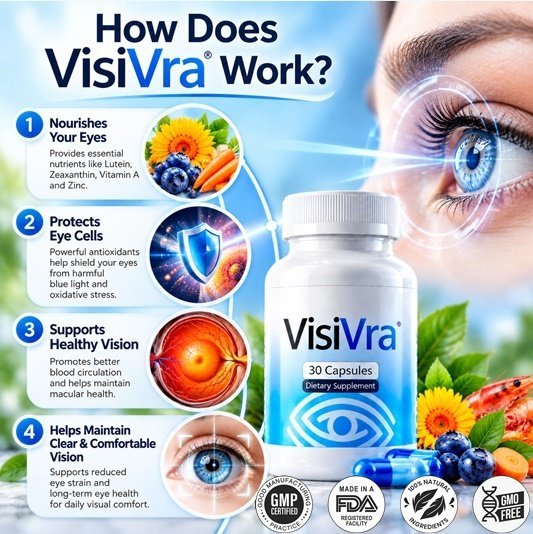
Inside your eye, lutein and zeaxanthin form the macular pigment, which absorbs blue light — up to 90% depending on its density, per the Linus Pauling Institute. That’s a natural filter you can support with leafy greens and eggs, or supplements such as those in the Visivra formula. It’s a long-term support measure, not a fix for today’s screen fatigue.
Children and screens
Children spend more time than ever on devices, and parents often worry about blue light. The same principles apply: the issue is mostly focusing effort, reduced blinking, posture and sleep disruption rather than light damage. Encourage breaks, time outdoors and screen-free time before bed, and arrange an eye test if a child squints, rubs their eyes, holds devices very close or complains of headaches.
Sunlight is the bigger exposure
Because the sun emits far more blue light (and ultraviolet) than any screen, outdoor eye protection matters more than screen filters. The CDC recommends sunglasses that block nearly all UV-A and UV-B. A wide-brimmed hat adds more protection on bright days.
Quick facts
- Biggest blue-light source: the sun.
- Screen blue light damaging eyes: no scientific evidence (AAO).
- Blue-light glasses for screen strain: not recommended by the AAO.
- Main cause of screen discomfort: reduced blinking and sustained focus.
The bottom line
Screens don’t damage your eyes through blue light, but they do tire them through the way we use them. Breaks, blinking, a good setup and the right glasses solve most of it. Save your money on blue-blocking lenses unless your eye doctor suggests otherwise, and see an eye professional if discomfort persists.
Our Visivra review pulls the formula, the evidence, the price and the fine print together on one page.
Common questions
Is blue light from phones harmful?
The American Academy of Ophthalmology says there’s no scientific evidence that blue light from devices damages the eye.
Should I buy blue-light glasses?
The AAO doesn’t recommend them for computer use; evidence of benefit is lacking.
Why do my eyes hurt after screens?
Mostly reduced blinking, sustained focus and glare — known as digital eye strain.
Does night mode help?
It reduces evening blue light, which may help sleep. Limiting screens before bed helps more.
Do lutein supplements block blue light?
Lutein and zeaxanthin build the macular pigment, which absorbs blue light inside the eye over time.
Sources
- American Academy of Ophthalmology — Should You Be Worried About Blue Light?
- American Academy of Ophthalmology — Computers, Digital Devices, and Eye Strain
- CDC — Preventing Vision Loss
- Linus Pauling Institute, Oregon State University — Carotenoids
Each reference was opened and read when this page was last updated (October 18, 2026).
*The Food and Drug Administration has not evaluated these statements. Visivra is not intended to diagnose, treat, cure, or prevent any disease. We publish general information, not personal medical advice: please check with your doctor, pharmacist or eye-care professional before starting a supplement — particularly during pregnancy or breastfeeding, alongside medication, or with an existing eye condition.