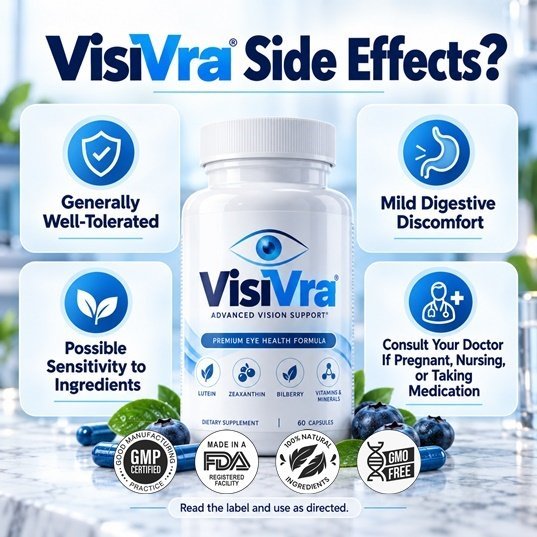
The 6-bottle bundle works out at $49 a bottle; every bundle carries a 60-day refund window that starts on your purchase date.
See Visivra OfferPaid linkSafety at a glance
| Ingredient | Possible side effects | Limit or safety reference | Take extra care if… |
|---|---|---|---|
| Zinc | Nausea, stomach upset, headache | UL 40 mg/day (adults) | On antibiotics, diuretics; taking other zinc |
| Vitamin A | Rare at normal doses | UL 3,000 mcg/day preformed | Pregnant; on retinoids; smoker (beta-carotene) |
| Lutein / zeaxanthin | None notable at studied doses | 10 mg + 2 mg/day used for years in AREDS2 | Taking several carotenoid products |
| Astaxanthin | Generally well tolerated | EFSA: up to 8 mg/day from supplements | Pregnant or breastfeeding (limited data) |
| Bilberry | Generally well tolerated | Extract up to 160 mg/day for 6 months studied | Pregnant; on any medication |
Zinc — the one to count
The NIH lists nausea, vomiting, stomach upset, dizziness, headache and loss of appetite as signs of too much zinc. Over weeks, intakes of 50 mg or more can block copper absorption, dampen immunity and lower HDL cholesterol. The adult upper limit is 40 mg/day from all sources. The 80 mg used in AREDS was for high-risk patients under medical supervision, and that formula added copper — Visivra doesn’t list copper.
Tip: take Visivra with food and avoid stacking it with zinc lozenges or immune supplements.
Vitamin A — form and amount matter
There are two kinds of vitamin A in supplements. Preformed vitamin A (retinol, retinyl palmitate or acetate) counts toward the 3,000 mcg/day upper limit and, at high doses, can cause liver problems and birth defects. Beta-carotene doesn’t have that limit, but in the CARET and ATBC trials, high-dose beta-carotene raised lung-cancer risk in smokers and asbestos-exposed workers (NIH).
Visivra’s sales page doesn’t say which form it uses. 450 micrograms RAE vitamin A
The seller offers 2-, 3- and 6-bottle bundles. If you take prescription medicine, show the label to your pharmacist first.
See Visivra OfferPaid linkThe carotenoids and bilberry
- Lutein and zeaxanthin have a strong safety record at 10 mg and 2 mg/day. Lots of carotenoids can tint skin slightly yellow-orange; it’s harmless and reversible.
- Astaxanthin: the European Food Safety Authority (EFSA) concluded up to 8 mg/day from supplements, plus a normal diet, is safe for adults.
- Bilberry: NCCIH considers the fruit safe in food amounts and reports extracts up to 160 mg/day for six months were well tolerated; the leaves may be unsafe at high doses or long term.
Medicine interactions
| If you take… | Relevant ingredient | Why it matters | Practical step |
|---|---|---|---|
| Ciprofloxacin, doxycycline and similar | Zinc | Both absorbed less | Antibiotic 2 h before or 4–6 h after |
| Penicillamine | Zinc | Medicine absorbed less | Keep ≥1 h apart |
| Hydrochlorothiazide, chlorthalidone | Zinc | More zinc lost in urine | Tell your doctor |
| Iron tablets (25 mg+) | Zinc | Zinc absorbed less | Take at different times |
| Orlistat | Vitamin A | Vitamin absorbed less | Ask your doctor |
| Acitretin, bexarotene, isotretinoin | Vitamin A | Toxicity risk | Avoid unless approved |
From the NIH fact sheets on zinc and vitamin A. For bilberry, NCCIH advises asking your provider if you take any medicine.
Groups who should ask a professional first
- Pregnant, planning pregnancy or breastfeeding
- Children and teenagers
- Smokers and ex-smokers
- People with liver or kidney disease
- People on the medicines in the table above
- Anyone with AMD, glaucoma, diabetic retinopathy or another eye diagnosis
- Anyone preparing for surgery (NCCIH advises disclosing all supplements early)
Warning signs: stop and get help
Stop Visivra and contact a healthcare professional for persistent nausea, vomiting or stomach pain; signs of an allergic reaction (rash, swelling, breathing difficulty — get urgent care); or headaches with blurred vision while taking several vitamin-A products.
Eye emergencies — sudden loss of vision, a shadow or curtain, flashes, a shower of floaters, severe eye pain or a red painful eye — need same-day medical care.
Reporting a reaction
If you believe a supplement caused a problem, tell your doctor and consider reporting it to the FDA’s MedWatch program. Keep the bottle so the batch can be identified, and contact the seller about a refund within the 60-day window.
Orders go through the seller’s BuyGoods checkout. Check the final total and screenshot it before you confirm.
See Visivra OfferPaid linkCommon questions
Does Visivra have side effects?
Most people have none. Mild nausea or stomach upset, usually from zinc, is the most likely.
Can I overdose on Visivra?
Taking more than directed, or combining it with other zinc and vitamin A products, can push you over safe limits. Follow the label.
Is Visivra safe for diabetics?
Its listed ingredients aren’t known to raise blood sugar, but people with diabetes should have regular eye exams and check new supplements with their doctor.
Is Visivra safe with blood pressure tablets?
Thiazide diuretics increase zinc loss. Mention Visivra to your doctor if you take them.
Can Visivra damage my liver?
High doses of preformed vitamin A can affect the liver. Keep total preformed vitamin A under 3,000 mcg/day unless advised otherwise.
Sources
- NIH Office of Dietary Supplements — Zinc: Health Professional Fact Sheet
- NIH Office of Dietary Supplements — Vitamin A and Carotenoids: Health Professional Fact Sheet
- EFSA — Safety of astaxanthin for its use as a novel food in food supplements
- NCCIH — Bilberry: Usefulness and Safety
- National Eye Institute — Age-Related Eye Disease Studies (AREDS/AREDS2): major findings
- NCCIH — Using Dietary Supplements Wisely
- U.S. Food and Drug Administration — Dietary Supplements
Each reference was opened and read when this page was last updated (October 18, 2026).
*The Food and Drug Administration has not evaluated these statements. Visivra is not intended to diagnose, treat, cure, or prevent any disease. We publish general information, not personal medical advice: please check with your doctor, pharmacist or eye-care professional before starting a supplement — particularly during pregnancy or breastfeeding, alongside medication, or with an existing eye condition.