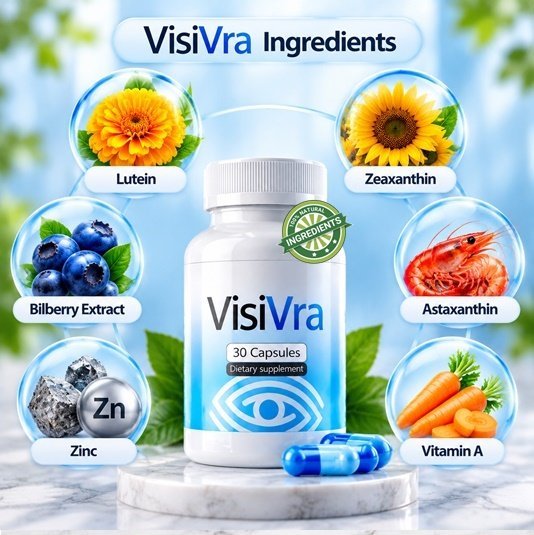
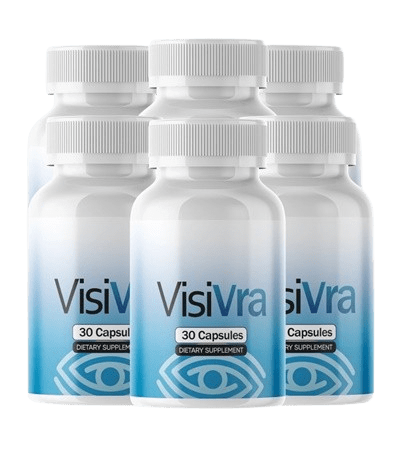
The 6-bottle bundle works out at $49 a bottle; every bundle carries a 60-day refund window that starts on your purchase date.
See Visivra OfferPaid linkThe six actives
| Ingredient | Type | Why it is used in eye formulas | Evidence snapshot |
|---|---|---|---|
| Lutein | Carotenoid | Builds the yellow macular pigment that absorbs blue light | Strong — raises macular pigment; 10 mg used in AREDS2 |
| Zeaxanthin | Carotenoid | Concentrates in the fovea, the centre of sharp vision | Strong alongside lutein; 2 mg in AREDS2 |
| Bilberry | Fruit extract | Anthocyanin antioxidants; traditional night-vision use | Weak — best trials show no night-vision gain |
| Astaxanthin | Algae carotenoid | Antioxidant tested for screen-related eye fatigue | Limited — one small sponsor-funded RCT |
| Zinc | Mineral | Helps the retina use vitamin A | Good in intermediate AMD (AREDS, 80 mg) |
| Vitamin A | Vitamin | Raw material for rhodopsin, the dim-light pigment | Essential; extra only helps if you are low |
Amounts aren’t published on the sales page. Research doses mentioned on these pages are not Visivra’s doses. 30 capsules per bottle. Take 1 capsule daily.
Three jobs, six ingredients
It helps to group the formula by what each ingredient is supposed to do:
| Job | Ingredients | Evidence |
|---|---|---|
| Build the macula’s light filter | Lutein, zeaxanthin | Strongest |
| Neutralise oxidative stress | Astaxanthin, bilberry | Weakest |
| Keep the light-sensing chemistry running | Vitamin A, zinc | Solid where intake is low |
The formula puts its best-supported ingredients first. The question marks are the antioxidants — and, across the board, the doses.
Visivra next to the AREDS2 formula
The AREDS2 trial, run by the National Eye Institute, is the yardstick for eye supplements:
| Nutrient | AREDS2 | Visivra |
|---|---|---|
| Lutein | 10 mg | ✓ (amount not stated) |
| Zeaxanthin | 2 mg | ✓ (amount not stated) |
| Zinc | 80 mg | ✓ (amount not stated) |
| Copper | 2 mg | — |
| Vitamin C | 500 mg | — |
| Vitamin E | 400 IU | — |
| Vitamin A / beta-carotene | Removed in AREDS2 | ✓ Vitamin A (form not stated) |
| Astaxanthin | — | ✓ |
| Bilberry | — | ✓ |
They overlap but aren’t interchangeable. If an eye doctor has advised AREDS2 for you, Visivra isn’t a substitute.
The seller offers 2-, 3- and 6-bottle bundles. If you take prescription medicine, show the label to your pharmacist first.
See Visivra OfferPaid linkEvidence grades explained
- A — strong: consistent human trials at known doses (lutein, zeaxanthin).
- B — good in a specific context: e.g. zinc in intermediate AMD; vitamin A when intake is low.
- C — limited: small or sponsor-funded trials (astaxanthin).
- D — weak: rigorous trials show no clear benefit (bilberry for night vision).
| Ingredient | Grade |
|---|---|
| Lutein | A |
| Zeaxanthin | A (with lutein) |
| Zinc | B |
| Vitamin A | B |
| Astaxanthin | C |
| Bilberry | D |
Safety across the formula
- Zinc: adult upper limit 40 mg/day; interacts with some antibiotics, penicillamine and thiazide diuretics (NIH).
- Vitamin A: preformed upper limit 3,000 mcg/day; high doses risk birth defects; beta-carotene raised lung-cancer risk in smokers (NIH).
- Astaxanthin: up to 8 mg/day from supplements judged safe for adults (EFSA).
- Bilberry: extract up to 160 mg/day for six months well tolerated; pregnancy safety unclear (NCCIH).
- Lutein/zeaxanthin: long track record at 10 + 2 mg/day.
Full guide: Visivra safety.
Four things to look for on the label
- Milligrams of lutein and zeaxanthin — compare with 10 mg and 2 mg.
- Form and amount of vitamin A — retinyl palmitate/acetate vs beta-carotene.
- Zinc amount and form — and whether copper is included.
- Astaxanthin source and amount; bilberry standardisation — e.g. “% anthocyanins”.
Also check “other ingredients” for capsule material and possible allergens.
What a complete label would tell you
A full Supplement Facts panel lists every active ingredient with its amount per serving and, for vitamins and minerals, the percentage of the Daily Value. Below it, an “Other ingredients” line lists capsule material, fillers and flow agents. Herbal extracts are often described with a plant part and a standardisation (for example, “fruit extract, standardised to X% anthocyanins”). These details let you compare products like for like — and they’re exactly what Visivra’s sales page is missing.
Our view of the formula
On paper, it’s a focused, sensible eye formula that leads with the right nutrients. What we can’t judge from the outside is whether each capsule carries enough of them. Until the seller publishes amounts, treat the formula as promising but unproven.
Orders go through the seller’s BuyGoods checkout. Check the final total and screenshot it before you confirm.
See Visivra OfferPaid linkCommon questions
What is the Visivra formula?
Lutein, zeaxanthin, bilberry extract, astaxanthin, zinc and vitamin A.
Is Visivra the same as AREDS2?
No. It shares three nutrients but lacks vitamins C and E and copper, adds astaxanthin and bilberry, and doesn’t publish doses.
Which ingredient matters most?
Lutein (with zeaxanthin) has the strongest evidence for supporting the macula.
Does the formula contain stimulants or caffeine?
None are listed. Check the full label for other ingredients.
Why aren’t the doses listed?
We don’t know — the sales page simply doesn’t show them. Ask the seller or read the bottle.
Sources
- National Eye Institute — Age-Related Eye Disease Studies (AREDS/AREDS2): major findings
- Linus Pauling Institute, Oregon State University — Carotenoids
- NIH Office of Dietary Supplements — Zinc: Health Professional Fact Sheet
- NIH Office of Dietary Supplements — Vitamin A and Carotenoids: Health Professional Fact Sheet
- EFSA — Safety of astaxanthin for its use as a novel food in food supplements
- NCCIH — Bilberry: Usefulness and Safety
- Sekikawa T. et al. Effects of diet containing astaxanthin on visual function in healthy individuals: a randomized, double-blind, placebo-controlled, parallel study. J Clin Biochem Nutr. 2023;72(1):74–81
- Visivra sales page (seller)
Each reference was opened and read when this page was last updated (October 18, 2026).
*The Food and Drug Administration has not evaluated these statements. Visivra is not intended to diagnose, treat, cure, or prevent any disease. We publish general information, not personal medical advice: please check with your doctor, pharmacist or eye-care professional before starting a supplement — particularly during pregnancy or breastfeeding, alongside medication, or with an existing eye condition.